Keynote Speakers
(排名不分先后)
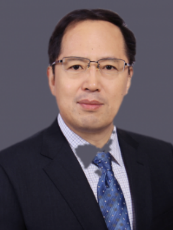
Guang-Ren Duan, Harbin Institute of Technology, China 段广仁,哈尔滨工业大学(中国科学院院士,IEEE Fellow,IET Fellow)
Biography: Guang-Ren Duan received his Ph.D. degree in Control Systems Sciences from Harbin Institute of Technology, Harbin, P. R. China, in 1989. After a two-year post-doctoral experience at the same university, he became professor of control systems theory at that university in 1991. From December 1996 to October 2002, he visited the University of Hull, the University of Sheffield, and also the Queen's University of Belfast, UK. He is the founder and presently the Honorary Director of the Center for Control Theory and Guidance Technology at Harbin Institute of Technology. Recently, he has also established the Center for Control Science and Technology at the Southern University of Science and Technology (SUSTech) and is serving as the dean for the School of Automation and Intelligent Manufacturing at SUSTech. He is a Member of the Science and Technology Committee of the Chinese Ministry of Education, and has served as Vice President of the Control Theory and Applications Committee, Chinese Association of Automation (CAA), and Associate Editor of a few international journals. His main research interests include fully actuated system theories for nonlinear systems, parametric control systems design, descriptor systems, spacecraft control and magnetic bearing control, and he has published 5 books and over 450 SCI indexed publications. He is an Academician of the Chinese Academy of Sciences, and Fellow of CAA, IEEE and IET.
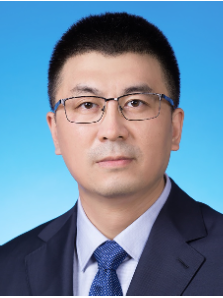
Yuxin Zhao, Harbin Engineering University, China 赵玉新,哈尔滨工程大学(党委常委、副校长)
Biography: Zhao Yuxin (IET Fellow), the vice-president of Harbin Engineering University (HEU), and a professor with the College of Intelligent System Science and Engineering of HEU. He serves as the Director of the Ministry of Education Engineering Research Center for "Navigation Instruments". His research interests include underwater navigation and AI based marine navigation systems. He has received the China Youth Science and Technology Award, the Hooi Ying Tung Education Award, and the Special Government Allowance from the State Council. He has won four first prizes for provincial and ministerial-level scientific and technological progress. He has also received the National Second Prize for Teaching Achievement.
Speech Title: Thoughts and Discussions on Intelligent Inertial Navigation System
Abstract: With the rapid development of various advanced robots, the demand for high-performance inertial navigation sensors is constantly increasing. This report first briefly reviews the evolution of inertial navigation technology. Through an analysis of the technical principles of inertial navigation systems, it highlights the significance of intelligent research in this field. It proposes the definition of an intelligent inertial navigation system for the first time internationally and introduces its research and experimental progress, offering a new technical approach to enhance the capabilities of inertial navigation systems.
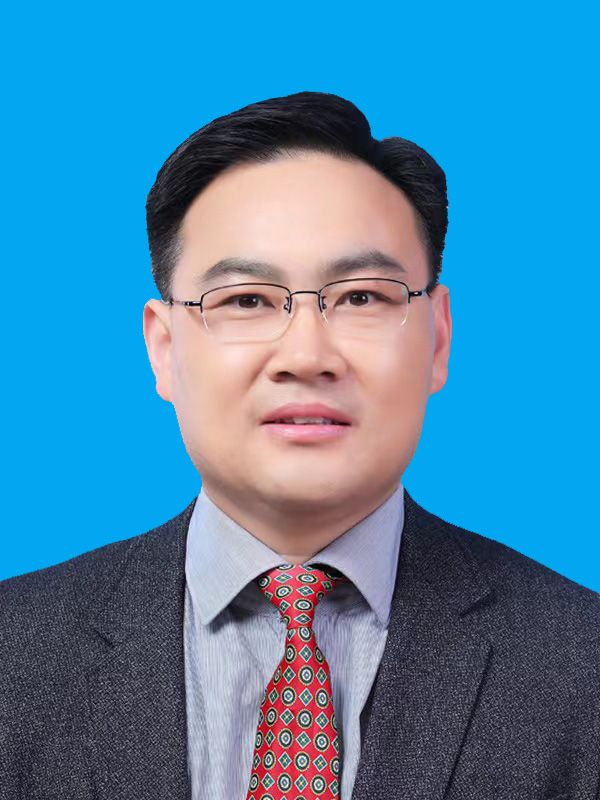
Qinglei Hu, Beihang University, China 胡庆雷,北京航空航天大学(自动化科学与电气工程学院院长)
Biography: Qinglei Hu obtained his B.Eng. degree in electrical and electronic engineering from Zhengzhou University, Zhengzhou, China, in 2001, and his Ph.D. degree with the specialization in guidance and control from Harbin Institute of Technology, Harbin, China, in 2006. From 2003 to 2014, he was with the Department of Control Science and Engineering, Harbin Institute of Technology, and then he joined Beihang University in 2014 as a Full Professor. His current research interests include intelligent perception and control, fault diagnosis and fault-tolerant control, and their applications in autonomous spacecraft systems. He has published five monographs in Elsevier, Springer, etc., and 100+ journal papers in IEEE transactions and AIAA journals. He has authorized 30+ national invention patents. He has won the second prize of national Technological Invention Award and the first prize of national defense technological invention Award. He has been appointed the Changjiang Distinguished Professorship, and has been selected as Thomson Reuters Highly Cited Researchers from 2016-2026. Currently, he serves as an Associate Editor for Chinese Journal of Aeronautics.
Speech Title: Intelligent Perception and Control for Spacecraft Proximity Operations with Non-Cooperative Targets
Abstract: Spacecraft proximity operations with non-cooperative targets, as enabling technologies for some current and near-future missions such as removing space debris, repairing defunct satellites, etc., have garnered extensive attention. The success of these missions heavily relies on accurate target perception and safe proximity control. However, the non-cooperative nature of targets and the complexities of the space environment pose significant challenges for the target perception and control of spacecraft proximity operations. In this talk, I would like to share our recent research advances on the intelligent perception and control for spacecraft proximity operations with non-cooperative targets. The main research contents include: 1) intelligent target perception in the complex space environment, including representation and determination of semantic information, three-dimensional reconstruction, and pose measurement of space non-cooperative targets; 2) reinforcement-learning-based intelligent proximity control under complex motion and physical constraints; 3) simulation and experimental validation of the proposed method in typical scenes. The research results provide significant theoretical and technical support for the autonomous manipulation and control of space non-cooperative targets. Finally, I shall close by discussing on-going and future research avenues that can further address some practical engineering problem in spacecraft proximity operations.
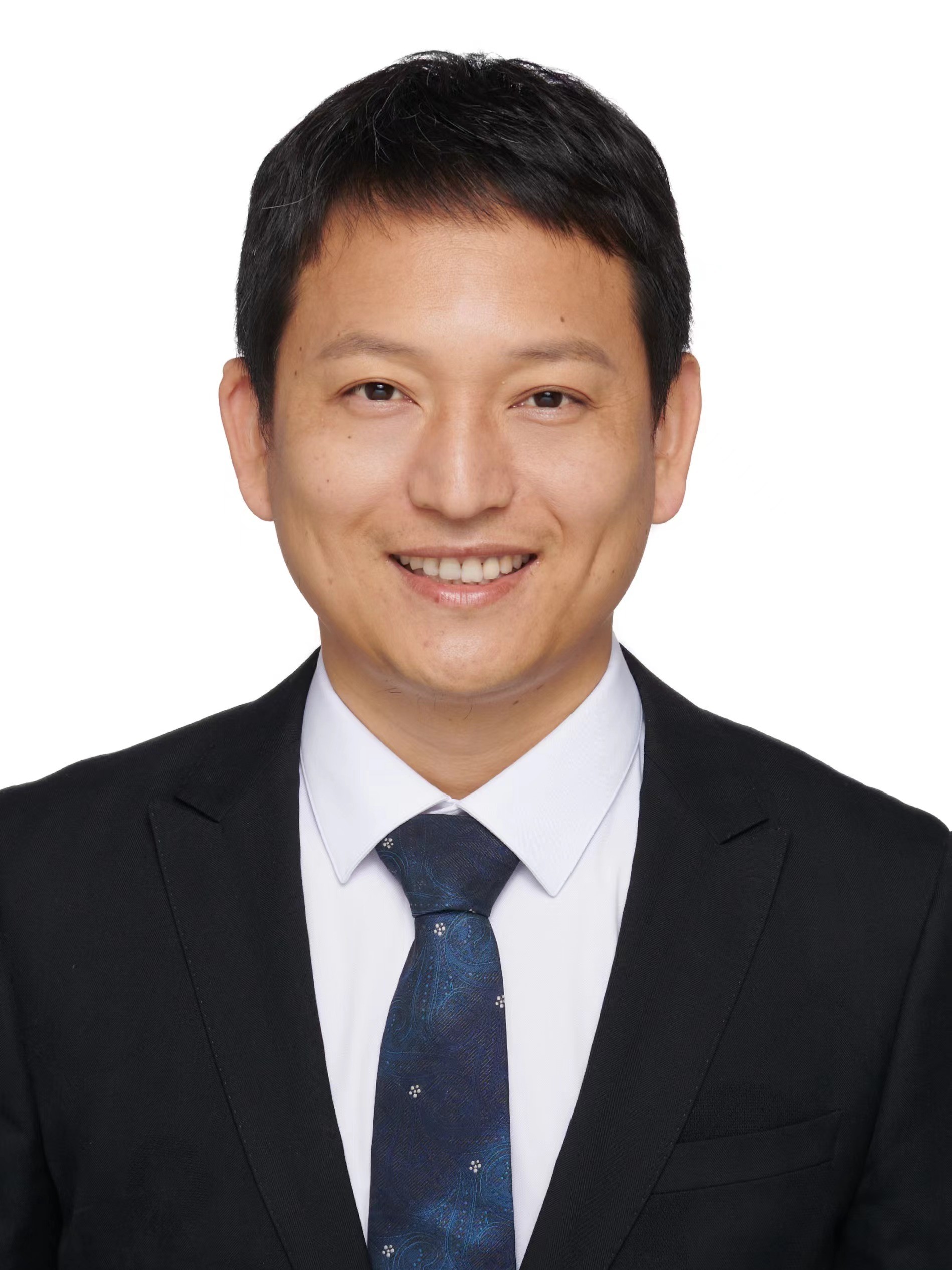
Lianqing Liu, Shenyang Institute of Automation, Chinese Academy of Sciences, China 刘连庆,中国科学院沈阳自动化研究所
Lianqing Liu is a Professor at Shenyang Institute of Automation, Chinese Academy of Sciences. Currently his research interests include Biosyncretic systems, Micro/Nanorobotics, Intelligent control. He has published over 100 peer reviewed international journal papers and led more than 20 funded research projects as Principal Investigator. He was awarded the Early Career Award by the IEEE Robotics and Automation Society in 2011, Outstanding Young Scientist of Chinese Academy of Sciences in 2014, Rising Star Award of 3M-Nano Society in 2015, Talent Young Scholar Funds of NSFC in 2015, National Program for support of Top-Notch Young Professionals in 2015, Xiongyoulun Outstanding Youth Award in 2018, Distinguished Young Scholar Funds of NSFC in 2019, Xplore Prize in 2024. He is the winner of Best Student/Conference paper Award for ICRA, ROBIO, ICIRA, IEEE-NEMS, IEEE-CYBER, IEEE-NANOMED and IEEE-3M-NANO, and delivered plenary/Keynote talks at ICRA, IROS, IEEE-NANO, IEEE-NANOMED, IEEE-NEMS, ICIUS, MARSS and so on. He is associate editors of Fundamental Research, Cyborg and Bionic Systems, Mechatronics, IET Cyber-Systems and Robotics, Control Theory and Applications. He has been elected as the vice president of IEEE Robotics and Automation Society for the term of 2018-2019, served as a member of long range planning committee of RAS.
Speech Title: Nanomanipulation and Nanometrology Robotic System and Its Applications in Semiconductor Industry
Abstract: The manufacturing of core components for national flagship high-end equipment, including lithography machine optics, pulse compression gratings for inertial confinement fusion facilities, and X-ray focusing mirrors for synchrotron radiation devices, is inseparable from instruments enabling precision detection and manipulation at the nanoscale. In response to critical national strategic demands, this report integrates robotic perception, control, and decision-making frameworks with atomic force microscopy (AFM)—the sole instrument capable of high-frequency topographic characterization in the semiconductor industry. To address key bottlenecks such as severe noise interference, limited bandwidth, and low scanning speed, we propose a dual-probe mechanical differential noise suppression method. We establish a distance sensing theory based on squeeze-film damping effects and invent a high-speed scanning stabilization technology via force curve integral instantaneous force control. These theoretical and technical breakthroughs have been translated into high-end industrial equipment, which now plays a vital role in fulfilling major national technological requirements.
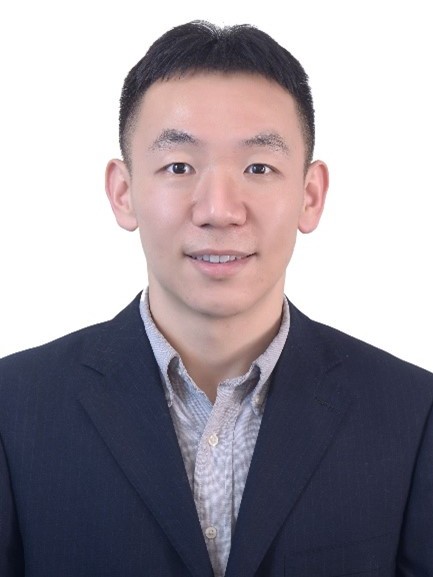
Chao Shen, Xi'an Jiaotong University, China 沈超,西安交通大学(IEEE Fellow)
Biography: Chao Shen, IEEE Fellow, IAPR Fellow, Chair Professor of Xi’an Jiaotong University, Cheung Kong Scholar Professor, Head of the National Natural Science Foundation of China Innovation Group, Head of the Ministry of Education Innovation Team, Director of the Ministry of Education Key Laboratory, Recipient of the Science Exploration Award, DAMO Academy Young Orange Award, MIT TR35 China, and IEEE SMC Early Career Award, Chief Scientist of the National Key Research and Development Program of China, and Chair of the IEEE Trustworthy and Controllable Intelligent Systems Technical Committee.
Speech Title: Trustworthy AI: From Large Models to Industrial Embodied Intelligence
Abstract: Artificial intelligence systems have achieved a crucial evolutionary leap from generic large models to industrial embodied intelligence, empowering the full-scenario deployment of industrial intelligent sensing, precise control, and autonomous decision-making. With the continuous deepening of industrial integration, the security and trustworthiness risks of intelligent systems have extended far beyond traditional network and system security, covering the whole lifecycle links of data governance, model iteration, algorithm execution and industrial application. Trustworthy assurance of artificial intelligence has become a core bottleneck and key requirement for the safe, stable and reliable operation of industrial intelligent systems in design, development and deployment. This paper systematically sorts out the research progress in the field of trustworthy artificial intelligence. Centering on the core trustworthy dimensions including confidentiality, integrity and privacy protection, and based on the component architecture of industrial intelligent supply chains, it comprehensively introduces the team’s innovative research and practical achievements in the intrinsic security and extrinsic trustworthy governance of industrial-oriented intelligent systems.
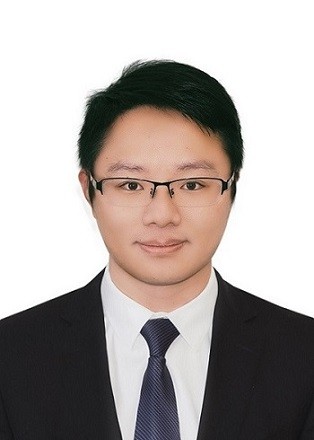
Shuo Feng, Tsinghua University 封硕,清华大学
Biography: Shuo Feng received the bachelor’s and Ph.D. degrees from the Department of Automation, Tsinghua University, China. He was also an Assistant Research Scientist in the University of Michigan, Ann Arbor. He is currently an Associate Professor with the Department of Automation, Tsinghua University. His research interests include the development and validation of safety-critical machine learning, particularly for embodied AI systems. He was a recipient of the Best Ph.D. Dissertation Award from the IEEE ITS Society, the ITS Best Paper Award from the INFORMS TSL Society, MIT TR35 China, and DAMO Academy Young Fellow. He is an Associate Editor of IEEE TRANSACTIONS ON INTELLIGENT VEHICLES and Accident Analysis and Prevention.
Speech Title: Curse of Rarity for Embodied AI Systems
Abstract: Embodied AI systems increasingly operate in open, dynamic, and safety-critical environments, where the most consequential events are often extremely rare. This talk introduces the “curse of rarity” for embodied AI systems. We argue that rarity is not merely a data imbalance problem but a fundamental obstacle across the embodied learning and deployment pipeline: rare events are underrepresented in training, difficult to generate in simulation, poorly captured by average-case metrics, and easily missed by perception, prediction, planning, and control modules. The talk will formalize rarity in embodied settings, examine its manifestations in autonomous driving, robotics, and general embodied agents, and discuss how long-tail distributions, safety-critical evaluation, and world models interact with it. We will also outline promising directions, including rare-event generation, uncertainty-aware learning, closed-loop evaluation, and safety-oriented benchmarks. By elevating rarity from a domain-specific issue to a general principle, this talk aims to provide a unified perspective for building reliable embodied AI systems.