Special Session 10
Renewable Energy Power Forecasting and Its Applications in Power Systems
Introduction: The global transition towards a low-carbon future has significantly accelerated the integration of renewable energy sources, such as wind and solar, into modern power systems. However, the inherent intermittency and volatility of renewable generation present unprecedented challenges to grid stability, reliability, and economic operation. Consequently, highly accurate renewable energy power forecasting has emerged as a critical prerequisite for efficient power dispatch, energy storage management, and secure grid operation.
Traditional forecasting models often struggle to capture the complex, non-linear spatiotemporal dependencies within modern power networks. Recently, the rapid evolution of artificial intelligence—particularly multivariate time series analysis, deep learning (e.g., Graph Neural Networks, Transformers), and AI-driven digital twins—has unlocked new potentials for addressing these bottlenecks.
This Special Session aims to provide a premier interdisciplinary platform for researchers and engineers to share cutting-edge methodological advancements and practical applications in this field. The scope encompasses advanced data-driven forecasting algorithms, multi-source spatial-temporal data fusion, and probabilistic forecasting. Crucially, the session also strongly emphasizes the downstream applications of these forecasts in cyber-physical power systems, including intelligent dispatch, grid fault simulation, and cloud-edge collaborative control.
By bridging the gap between state-of-the-art predictive algorithms and real-world power system engineering, this session seeks to foster innovative solutions for building the next generation of smart, resilient, and sustainable power grids.
Organizers:
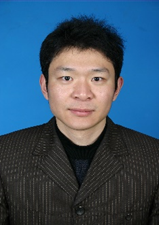 |
Xuguang Wang, North China Electric Power University, ChinaDr. Xuguang Wang is currently an Associate Professor in the Department of Automation at North China Electric Power University. He received his Ph.D. degree in Pattern Recognition and Intelligent Systems from the Institute of Automation, Chinese Academy of Sciences in 2009. He also enriched his academic experience as a Postdoctoral Researcher at Beihang University and a Visiting Scholar at UC Santa Barbara. |
 |
Dan Huang, North China Electric Power University, ChinaDan Huang is currently a Lecturer with the Department of Automation, North China Electric Power University. She got the Doctor's degree in June 2021 in Control Science and Engineering at South China University of Technology. She was engaged in postdoctoral work in the School of Mechanical and Automotive Engineering during 2021-2024.Her current research interests include image processing, computer vision and pattern recognition. She is a peer reviewer for journals such as IEEE APAMI, IEEE TII and so on. |
Submission Guideline:
Please submit your manuscript via Online Submission System: https://easychair.org/conferences/?conf=rcae2026
Please choose "Special Session 10"