Special Session 7
Autonomous Evolution and Intelligent Evaluation of UAV Swarm
Introduction: In order to solve the installed unmanned clusters in multi-source interference under the combat effectiveness is low, poor coordination ability and the effect of the assessment is difficult and other key issues, to speed up the rapid generation of unmanned clusters of intelligent combat forces, give full play to the unmanned clusters in the complex conditions of the real-time path planning, autonomous search and reconnaissance, intelligent optimization of decision-making, intelligent strikes to assess the advantages of the destruction of the unmanned clusters to achieve the unmanned clusters of performance from the "zero-intelligence" to the "high-intelligence" iterative evolution, UAV clusters of the evolution of the control of the autonomy of the evolution of the unmanned aerial vehicle clusters are particularly important, is one of the difficulties that urgently need to be overcome.
With the theme of "Autonomous Evolution and Intelligent Evaluation of UAV Clusters", this invited symposium focuses on the theoretical and technological frontiers of autonomous evolution and intelligent evaluation of UAV clusters, with an emphasis on the concepts, theories, technologies, and applications of intelligent perception, autonomous evolution, intelligent decision-making, and real-time destruction and evaluation of UAV clusters under complex working conditions. Original papers are invited but not limited to the following topics:
- New methods and techniques for modeling, simulation, and validation of UAV clusters
- New Theories, Methods, and Technologies for Autonomous Evolution of Unmanned Clusters
- Unmanned Cluster Intelligent Cooperative Sensing and Recognition Technology
- Heterogeneous unmanned cluster autonomy and system control technology
- Cooperative tracking and control technology for unmanned clusters in adversarial environments
- Theories, methods, techniques, systems or platforms related to unmanned cluster systems
Organizers:
 |
Jialong Zhang, Test Center, National University of Defense Technology, ChinaJialong Zhang (Member, IEEE) received the B.Eng. degree from the North China Institute of Aerospace Engineering, Langfang, China, in 2014, and the M.E. degree from the College of Aeronautics and Astronautics Engineering, Air Force Engineering University, Xi'an, China, in 2017, and Ph.D. degrees from the School of Automation, Northwestern Polytechnical University, in 2021. |
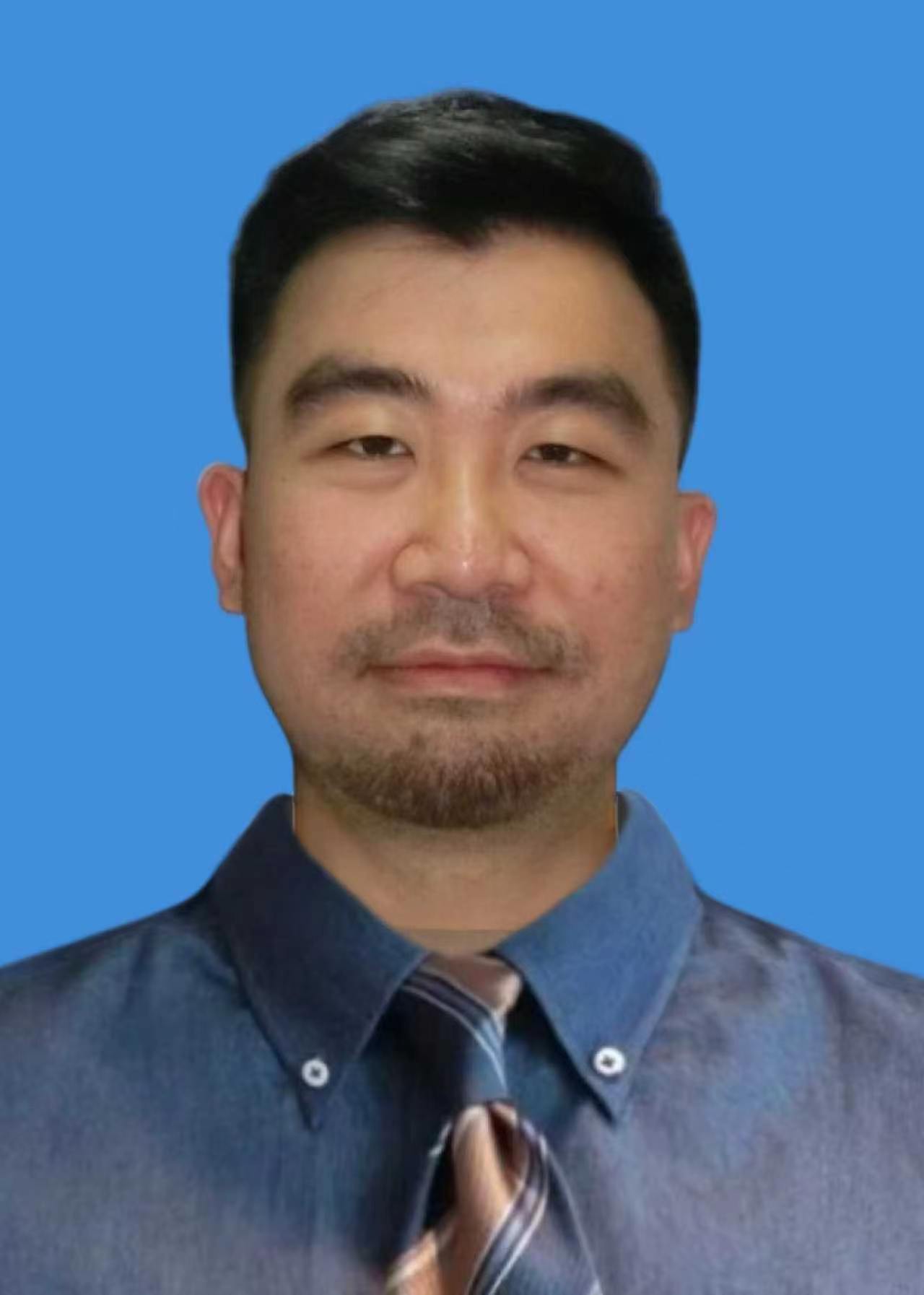 |
Wei Duan, Test Center, National University of Defense Technology, ChinaWei Duan received the Ph.D. degree in control theory and control engineering from Xidian University, Xi'an, China, in 2024. He was a postdoctoral researcher in Polytechnic University of Bari, Bari, Italy from 2024 to 2025. |
 |
Pu Zhang, Xi'an University of Technology, ChinaPu Zhang received the BEng and MEng degrees from the Xi’an University of Technology, in 2014 and 2017, respectively. She is currently working toward the PhD degree at Northwestern Polytechnical University. In 2021 and 2022, She was a joint Ph.D. student with the Department of Electrical and Electronic Engineering, Nanyang Technological University, Singapore, supported by the China Scholarship Counil. She is currently a teacher at School of Automation and Information Engineering, Xi'an University of Technology. Her main research interests include multiagent systems, fault-tolerant control, distributed control, finite-time control, resilient control, and cyber-physical systems. She also serves as a Reviewer for some scientific journals, such as IEEE Transactions on Automation Science and Engineering, The Journal of the Franklin Institute, IEEE Transactions on Aerospace and Electronic Systems, ISA Transactions, and so on. She presided over more than 4 national projects, published more than 30 academic papers and one academic monograph. |
Submission Guideline:
Please submit your manuscript via Online Submission System: https://easychair.org/conferences/?conf=rcae2026
Please choose "Special Session 7"