Special Session 9
Intelligent Control and Simulation for Power Generation Systems
Introduction: The rapid transformation of the power generation industry toward low-carbon, intelligent, and secure operation has created urgent demands for advanced control, simulation, and optimization technologies. With the large-scale integration of renewable energy, multi-energy coupling, and digitalized power generation systems, modern energy systems are facing increasing challenges in dynamic uncertainty, operational efficiency, cyber-physical security, and coordinated control.
Traditional modeling and control methods often struggle to address complex nonlinear dynamics, multi-source disturbances, and security threats in power generation processes. Recent advances in artificial intelligence, large-scale AI models, digital twins, intelligent simulation, and cloud-edge collaborative control provide new opportunities for enhancing perception, prediction, decision-making, and defense capabilities in energy systems.
This Special Session aims to provide an interdisciplinary platform for researchers and engineers to share recent methodological advances and engineering applications in Intelligent Control and Simulation for Power Generation Systems. The scope includes AI-driven modeling and forecasting for renewable energy generation, energy consumption on the demand side, and thermal power systems; intelligent equipment development for energy generation systems; cyberattack detection and defense for power generation process control systems; and integrated optimization, dispatch, and collaborative control of multi-energy systems.
By bridging artificial intelligence, process control, simulation verification, and energy system engineering, this session seeks to promote innovative solutions for secure, efficient, and intelligent power generation, supporting the development of next-generation resilient and sustainable energy systems.
Organizer:
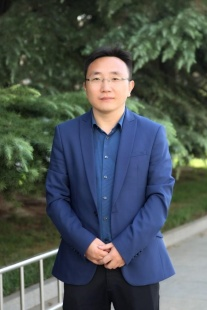 |
Yu Huang, North China Electric Power University, ChinaDr. Yu Huang is currently a Professor in the Department of Automation at North China Electric Power University, where he also serves as Deputy Head of the Department. He received his Ph.D. degree in Control Theory and Control Engineering from North China Electric Power University in 2012. He further enriched his academic experience as a Postdoctoral Researcher at Tsinghua University and a Visiting Scholar at Baylor University. |
Submission Guideline:
Please submit your manuscript via Online Submission System: https://easychair.org/conferences/?conf=rcae2026
Please choose "Special Session 9"